|
|
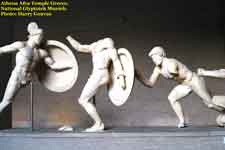
Part 2 In Aegina, as you go towards the mountain of Zeus, God of all the Greeks, you reach a sanctuary of Aphaea, in whose honor Pindar composed an ode for the Aeginetans. The Cretans say (the story of Aphaea is Cretan) that Carmanor, who purified Apollo after he had killed Pytho, was the father of Lubulus, and that the daughter of Zeus and of Carme, the daughter of Eubulus, was Britomartis. She took delight, they say, in running and in the chase, and was very dear to Artemis. Fleeing from Minos, who had fallen in love with her, she threw herself into nets which had been cast (aphemena) for a draught of fishes. She was made a goddess by Artemis, and she is worshipped, not only by the Cretans, but also by the Aeginetans, who say that Britomartis shows herself in their island. Her surname among the Aeginetans is Aphaea; in Crete it is Dictynna (Goddess of Nets). Pausanias East Pediment (490-480) BC 937 BC. Laomedon King of Troy is slain by Hercules. Priam succeeds him. Sir Isaac Newton, A short chronicle: From the First Memory of things in Europe to the Conquest of Persia by Alexander the Great Conquest of Troy by 3-6 3 Trojans, 4 Greek warrior, (5 Telamon) 7
Curiosity
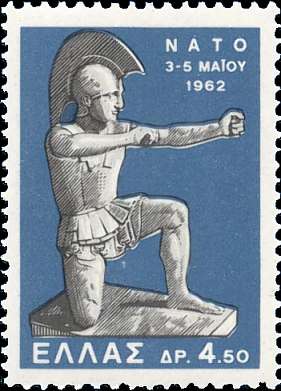
Support of the North Atlantic Alliance (NATO) from Athena and Hercules with another helmet
|