|
|
Part 1
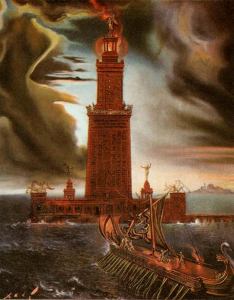
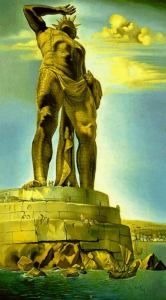
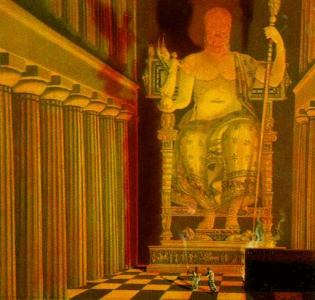
Salvador Dali's versions of three of the seven Wonders of the World in Antiquity (all in 1954); a) The ) with multiple hidden images. It primarily focuses on the torreador (bull-fighter), whose face is hidden within the repeated representation of the Venus de Milo. The upper portion of the painting contains the bull-fighter's arena, again surrounded by multiple images of the goddess. There is also a hidden image of the bull in the lower left quadrant of the painting (drinking water from a pool), and an image of a boy (possibly a self-portrait as a child, as his clothing represents the approximate time period of his boyhood). (Information from ) one of Dali's last pieces of Art. (The last produced 1983). Why did Salvador Dali produce this work. He knew that he will die and the image uses a hidden symbol. I have the following information (although no independent confirmation): The triangle with apex upward is derived from the Cretan glyph for the pyramid, the tomb. Since those times its' meaning has been "Death"
| ||||||||||||