|
|
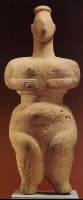
Griechische Kunst : Zeitlinie 6000-5000 BC Stone Idol from Sparta, Neolithic period
3300-2000 BC Early Cycladic Civilization 3300-2800 BC Civilization of Grotta-Pylos, 2800-2300 Keros-Syros, 2300-2000 Phylakopi I Phase
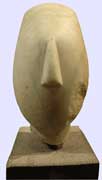
Head from Keros (Cyclades) 2700-2300 BC 2000-1700 BC Middle Bronze Age 1900 BC construction of Palaces of Knossos, Malia and Kato Zakros Achaeans enter in Greece. c. 1700, destruction of palaces by earthquakes 2000-1600 BC Middle Cycladic Period 1700-1100 BC Late Bronze Age Minoan (from 3000 BC until 1400 BC with catastrophic events around 1700 and 1450 BC and Mycenean invasion around 1400). Since 1500 Mycenean civilization. 1600 1100 BC Late Cycladic Period 1700-1450 BC Neopalatial period after restoration of destroyed palaces in Knossos 1450-1100 BC Postpalatial period with Mycenean influence
1350 BC, Goddess with Poppy-headed Pins 1100-850 BC Dark Age 1000 - 900 BC Protogeometric pottery, Decoration with black bands, wavy lines and simple geometric designs, concentric and half circles ?? BC “Daidalos the son of Eupalamos, son of Etion and Alkippe, made [this] labyrinth. He was the best builder and the first inventor of statues” according to Apollodoros Bibliotheca, 1st Century AD. --- “he was the first to represent the eyes open and the legs separated as they are in walking, and also to render the arms and hands as if stretched out ... For the artists who preceded him used to make their statues with the eyes closed, and with the arms hanging straight down and attached to the ribs.”according to Diodorus Chronology and Terminology Details of the Periods and Terminology from The Prehistoric Archaeology of the Aegean Website. Actually not all experts agree on the dates, which are only approximations. Geometric Period (900-700 BC) 900 - 700 BC c. 700 - 650 BC Invention of the sphyrelation technique, creation of large bronze statues by nailing hammered sheets of bronze onto a wood core. (Dreros Group, Apollo, Artemis and Leto, Crete). Probably first introduced in Samos. Geometric pottery, Early Geometric (EG, 900-850), middle Geometric (MG, 850-760) and late Geometric (LG, 760-700), Increasing variety of rectilinear ornaments (meander, “battlements”, triangles, hatching etc.) cover a larger portion of the pot; simple figures of animals and human bngs - reduced to geometric forms c. 630 BC
The Lady of Auxerre, Daedalic style, after the legendary Daidalus (the skillful one). Probably from Crete c. 610 BC Athenian black-figure pottery until 520-510 700 - 500 BC Archaic pottery Orientalizing (700-600) BC: Style with elements from older civilizations of the Near East; (decorative animal and floral forms) early experiments with the incised black-figure technique and with polychrome (multi-colored) decoration; in various Greek centers experiments with narrative representations of myths and legends. Exekias, Andokides, Euthymides, Kleitias. Sir John Beazley defined and cataloged thousands of Attic Black-figure vases using information available such as painter, style or workshop origin Archaic Period (600-480 BC) 6th century BC Tektaios and Angelion 8 m large Apollo of Delos covered with gold Telekles and Theodoros, sons of Rhoikos, (Egyptian influence) (statue of the Pythian Apollo, Samos) Kanachos bronze Apollo Philesios (Pliny, NH 34.75 ), Aphrodite in Sicyon (Paus. 2.10.4) c. 580 BC
c. 580 BC Dipoinos and Skyllis, students (and sons?) of Daidalus, Sicyon school of sculpture
c. 570 BC
The Moschoforos (Calf bearer) a work probably of Phaidimos c. 566 BC One of the earliest known Panathenaic amphorae, The Burgon vase c. 550 - 520 BC
Statue of Kouros of Tenea, Corinth c. 550 - 520 BC Period of Aristion, archaic kore statue c. 540 - 500 BC Period of Antenor, marble, bronze c. 530 BC Peplos Kore statue from the Acropolis, Athens. c. 530 - 500 BC Period of Endoios, marble, Seated Athena c. 525 Red Figure Pottery in Athens, Siphnian Treasury Delphi Another sculpture produced 100 years earlier and covered with gold was the probably 8 m large Apollo of Delos, a work of Tektaios and Angelion.
c. 500 - 480 BC
Aphaia Temple Pediment statues (around 480 BC new East pediment) Classic Pottery: 500 - 323 BC, Euphronius (Archaic to Classic), Kleophrades, Brygos, Kleophon Ageladas (or Hageladas) of Argos, flourished late 6th and early 5th centuries BC, probably teacher of Polykleitos of Argos, Myron of Eleutherai and Pheidias , Herakles Alexikakos statue, Zeus Ithomatas, Zeus Pais, Youthful Herakles. c. 500 -450 BC Kallon of Aigina student of Tektaios and Angelion 5th century Anaxagoras of Aigina, sculptor, Zeus statue near the Bouleuterion (Pausanias) Early (transitional and severe) and High Classical Style (480-400 BC) 480 - 460 BC Period of Critius (or Kritios) and Nesiotes Critius Boy, Charioteer of Motya , Tyrannicides, a bronze group that depicted Harmodios and Aristogeiton c. 478 - 474 BC
The Charioteer of Delphi, Sotades. 2nd half of 5th century BC Colotes (or Kolotes). Helped Pheidias on the statue of Zeus at Olympia; statues of philosophers. Material chryselephantine; bronze c. 490 - 430 BC Period of Pheidias , son of Charmides, bronze, marble and chryselephantine, Athena Promachos on the Acropolis at Athens; an Amazon at Ephesus; Athena for the Parthenon; Zeus at Olympia (Most famous sculptor in antiquity; also an architect and painter). Students of Pheidias: Alkamenes, Agorakritos of Paros, Colotes assistant in the making of the Zeus at Olympia 470 - 430 BC Working period of Calamis, Zeus Ammon; statue of Apollo; Asclepius in Sicyon; Sosandra on the Acropolis at Athens. Material used bronze, marble, gold, ivory, chryselephantine. 460 - 450 BC
The first Riace warrior (Bronze or Statue A) c. 460
Poseidon (some say Zeus) of Artemision in the National Museum of Athens. Probably a work of Kalamis
c. 460 - 430 BC Period of Myron of Eleutherai, bronze and marble, Discus thrower; Athena and Marsyas; a cow on the Acropolis at Athens. Teacher of his son Lykios another sculptor. 2nd half of 5th century Period of Polycleitus, bronze, marble, gold, ivory, chryselephantine. Doryphoros; Diadoumenos; statue of Hera at Argos; athletes at Olympia. Wrote a book on rhythm and proportion. Students of Polycleitus according to Pliny: Alexis, Argeios, Asopodoros, Athenodoros, Damias of Kleitor, Deinon and Phrynon c. 450 BC Athena Lemnia, on the Acropolis, Pheidias
Discobolos (Discuss Thrower), bronze sculpture by Myron Chiaroscuro, 3-dimensional painting technique, by using highlighting and shadowing. c. 450 - 440 BC
The Doryphoros or Canon, Polykleitos (or Polycleitus) of Sicyon, Dying Daughter of Niobe, Rome Museo Nazionale. Found on the Esquiline, Rome 450 - 430 BC Period of Cresilas, statue of Pericles and wounded Amazon 447 - 432 BC Parthenon (complete 438 with decorations added until 432), 437-432 Propylaia (Mnesikles) 440 - 400 BC Period of Alcamenes, Statue of Dionysus, an athlete, Hermes of the Gateway. Material marble, bronze, gold ivory and chryselephantine, probably work for Parthenon for Pheidias Period of Agoracritus, a favorite student of Pheidias, marble and bronze, Statues of Nemesis at Rhamnus, the Mother of the Gods at Athens Late Classical Period (4th century BC, 430-323 BC) c. 430 - 420 BC
The second Riace warrior with a helmet (Bronze B or Statue B). Diadoumenos statue, Polycleitus c. 425 BC Paeonius of Mende, Statue of Nike of Paeonius, marble
Aphrodite of Knidos (Cnidos or Cnidus) Praxiteles 380 - 340 BC Working period of Timotheus, temple of Asclepius at Epidaurus and Mausoleum at Halicarnassus c. 380 - 325 BC Period of Praxiteles Statues of Aphrodite; Apollo; Apollo Sauroctonus; Satyrs; Artemis; Eros; Dionysus, Phryne; Hermes with Dionysus. Material bronze, marble. One of the most known Greek artist. Only 1 original statue, and part of a bas-relief probably executed under his direction. Literature describes around 50 statues of Praxiteles. c. 375 - 370 BC
Cephisodotus (or Kephisodotos the Elder’s) perhaps the father of Praxiteles, Eirene & Ploutos (bronze?). Statue group erected in the Agora, Athens 370 - 330 BC Period of Euphranor of the Isthmus of Corinth, Philip II and Alexander the Great riding in chariots; statue of Paris, cult statue of Apollo Patroos, all in Athens. Also a painter and treatise writer on colours and symmetry. 4th century BC Scopas (or Skopas) of Paros, marble , around thirty statues distributed in Greece proper and on the coast of Asia Minor, architect of a temple of Athena at Tegea in Arcadia which was built to replace one destroyed by fire in 395-4. He as active as late as the middle of the century, being one of four sculptors engaged on the reliefs of the Mausoleum or funeral monument of Maussollus, satrap of Caria. Statues all representing divinities or other imaginary beings mentioned in literature but only the Maenad statue survived. Silanion of Athens, bronze , Statues of Achilles, Theseus, Dying Jocasta, Sappho, Corinna, Plato, Apollodorus, three boxers. (Wrote on the rules of proportion) c. 353 - 350 BC Death of Mausolus ( King of Halikarnassos) Aspasia builds the "Mausoleum" with sculptures by Scopas, Bryaxis, Timotheos, and Leochares c. 344 - 333 BC Daochos Monument, Lysippos Delphi c. 343 - 330 BC
Hermes and Dionysos, Praxiteles c. 340 BC
The Ephebe (Young man) of Antikythera, bronze statue, called also “The Ball Player”, or “Paris”, created in Polycleitus tradition. Many think that it is the work of Kleon of Sicyon or a work of Euphranor. c. 330 BC
Apoxyomenos by Lysippus (or Lysippos) of Sicyon. Probably worked during the reign of Alexander (336-23). Thus he belongs to the generation succeeding that of Scopas and Praxiteles. c. 330 - 325 BC
The Ephebe (Young man, maybe Hermes) from Marathon. 323-44 BC Hellenistic Period c. 320 BC
The Farnese Hercules, bronze original by Lysippos.
Apollo Belvedere from the Athenian artist Leochares who worked for Alexander the Great c. 317 BC Demetrios of Phaleron's passed a law that prohibited the erection of elaborate stelai. Themis by Cheirestratos 3rd century BC Eutychides of Sicyon, sculptor and painter, student of Lysippus, Tyche of Antioch “seated on a rock, with the Orontes River at her feet” Kantharos of Sicyon, student of Eutychides, sculpture of the wrestler Cratinus of Aegeira c. 280 250 BC Xenocrates of Sicyon, sculptor, painter, student of Eythycrates the son of Lysippus. According to Pliny Author of the books De Toreutice and De Pictura 228 BC Dying Gaul and his Wife, Galatian monument by Attalos I c 200-150 BC Period of Damophon, Cult statues in Peloponnese; repaired statue by Pheidias of Zeus at Olympia 2nd c. BC
Old Market Woman c. 190 BC
Nike of Samothrace by Pythokritos of Rhodes c. 150 BC bronze original?
Marble copy produced by the three sculptors 1)Athanadoros son of Hagesandros, 2) Hagesandros son of Paionios 3) Polydoros son of Polydoros of Rhodes The Laocoon Group and Sperlonga sculptures by 166 - 156 BC Altar of Zeus in Pergamon East, South, North, West Frieze, a work of up to 40 sculptors with 15 signatures found. 150 - 100 BC
Boy with Goose, Boethus (or Boethos) of Chalcedon c. 130 - 120 BC?
Aphrodite of Melos (Venus de Milo) sculpture from Alexandros of Antioch, son of Menides, The Apotheosis of Homer relief produced by Archelaos , the son of Apollonius of Priene c. 120 BC?
The sleeping Satyr, (Barberini Faun), Munich Glyptothek, sculptor unknown 140 - 120 BC? Period of Eubulides the Younger, Colossal group of Athena, Zeus, Mnemosyne, the Muses, and Apollo at Athens Son of sculptor Euchior and grandson of sculptor Eubulides the Elder
Belvedere Torso, 2nd -1st century BC, Apollonius the son of Nestor from Athens, Citta del Vaticano, Sala delle Muse First Century BC Agasias of Ephesus, son of Dositheus, Sculptor of The Borghese Gladiator, now in the Louvre. Agasias of Ephesus, son of Menophilus, Sculptor of a warrior in the museum of Athens. 170 - 180 AD Pausanias provides important information about pieces of Art he has seen in various cities in his book Description of Greece 1506 The Laocoon sculpture was found in Rome on January 14, 1506 near the site of Neros Domus Aurea or 'Golden House' 1540 Discovery of The Farnese Hercules in the Baths of Caracalla in Rome 1611 Discovery of The Borghese Gladiator at Nettuno near Anzio in 1611. By 1613 it was in the Borghese collection. In 1807 it was purchased by Napoleon. 1674 Jacques Carrey, a French artist spents two weeks making sketches and drawings of the Parthenon that provide an idea of the building as it was before the almost complete destruction.
1764
Johann Joachim Winckelmann ( born 9. 12. 1717 Stendal/Germany 8.6.1768 / killed in Trieste by Francesco Arcangeli ) writes the influential book: Geschichte der Kunst des Altertums (History of Art of Antiquity). He never visited Greece (that may explain his idealism).
1811 Discovery of the Aphaia temple sculptures (Aegina ) by the english architects C.R. Cocharel and John Foster together with Baron Haller von Hallerstein. King Ludwig buys the sculptures that are today in the Glyptothek in Munich/Germany. Later Restoration in Italy under the superintendence of the Danish sculptor Thorwaldsen 1820 Discovery of Aphrodite of Melos (Venus de Milo) on the island of Melos one of the Cyclades islands 1849 Apoxyomenos, Roman marble copy found 1849 in the Trastevere district of Rome. 1863 Discovery of the Nike of Samothrace , the basis of the Nike, a ship's prow, was found in 1875 1864 Discovery of The Moschoforos (Calf bearer) in Athens c. 1870 Discovery of “Tanagra” terracotta figurines 1875 20 -21 December discovery of the Nike of Paeonios and its pedestal 8th May 1877 Hermes and Dionysos by Praxiteles found at the Hera temple now at the museum of Ancient Olympia. 1894 Discovery of the kouroi Kleobis and Biton and a statue of Antinoos in Delphi 1900 a disgruntled museum guard threw a stool at the case and smashed the François Vase to 638 pieces. It was restored in by Pietro Zei, incorporating the Strozzi fragment, but missing another piece which had been stolen. That piece was returned in 1904. A new reconstruction was performed in 1973. 1903 Discovery of the Snake Goddess by Arthur Evans in the Temple Repositories in Knossos, Crete 1926 Discovery of The Ephebe (Young man, maybe Hermes) from Marathon found at the Marathon bay and the young Jockey of Artemision
1928
Discovery of Poseidon (or Zeus) of Artemision in a shipwreck at Cape Artemision. 1958 archaeologists found the workshop of Pheidias at Olympia (the place where the colossal gold ivory Zeus statue was produced. A bronze drinking cup was found with the inscription "I belong to Pheidias." 1959
Discovery of a Athena statue made in 340-330 BC by Kephisodotos during road construction works in Piraeus. Also found the Apollo of Peiraeus statue, a marble statue of Artemis,a mask, a shield, etc.
1961 Discovery of the archaic Mykonos vase with an illustration of the Trojan horse 1967 - 1973 Excavations at Thera, Santorini (Minoan city of “Akrotiri”) by Spyridon Nikolaou Marinatos (4-11-1901 1-10-1974) August 1972 Discovery of the two Riace warriors from the sea off coast of southern Italy (Calabria) near the village of Riace 1979 Discovery of Charioteer of Motya in Motya, Sicily 1981 Discovery of Kouros of Samos 1999 Discovery of the original bronze Apoxyomenos in the sea close to Lošinj, a Croatian island. 2002 Discovery of a new Dipylon Kouros 2004 http://www.novinite.com/view_news.php?id=39590 A bronze sculpture in Bulgaria found could be the work of Pheidias
Reports in German Antikenrezeption in Griechenland
Deborah Tarn Steiner , Images in Mind: Statues in Archaic and Classical Greek Literature and Thought
|
|
|||||||||||||||||