|
|
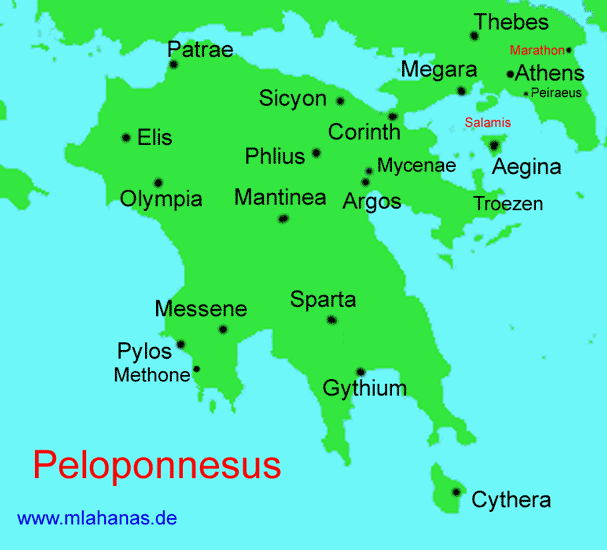
Argos (Greek: Άργος, Árgos) is a city in Greece in the Peloponnesus near Nafplio, which was its historic harbor, named for Nauplius. The name of the city originates from the ancient Greek root arg-, which signifies bright light (hence argyros, silver). The region of Argos was — and is — called the Argolid. It was a major stronghold of Mycenaean times, but the pre-Greek name of its acropolis, Larissa, reveals that it was a Pelasgian settlement. Argos, along with the neighboring acropoleis of Mycenae and Tiryns became very early settlements because of their commanding positions in the midst of the fertile plain of Argolid. Because of its refusal to fight in the Persian War, Argos was shunned by most other city-states. Its founding legend can be read under Danaus. In Homeric times it belonged to a follower of Agamemnon and gave its name to the surrounding district— the Argolid— which the Romans knew as Argeia. Eclipsed by nearby Sparta after the 6th century BC, Argos remained neutral or the ineffective ally of Athens during the 5th century BC struggles between Sparta and Athens. Argive Heraion Click to enlarge Sanctuary of Apollo Deiradiotes and Athena Oxyderkes Oracle of Apollo Deiradiotes, on the acropolis of Argos. The oracle was given by a prophetess, who was obliged to abstain from matrimonial connections once in every month. She was believed to become inspired by tasting of the blood of a lamb which was sacrificed during the night. This oracle continued to be consulted in the days of Pausanias Click to enlarge
Argive Heraion (sanctuary of Hera near Argos) Metopes of the Heraion of Argos Persons Chrysothemis and Eutelidas of Argos Links
Retrieved from "http://en.wikipedia.org/"
![]() |
|
|||||||||||||||||