|
|
A Born: 23 Jan 1840 in Eisenach, Grand Duchy of Saxe-Weimar-Eisenach (now in Germany)
The Zeiss factory is world renowned for the production of fine optical instruments including the operating microscope. Carl Zeiss (1816-1888) s German optical engineer was the founder of the factory. He was aided by Ernst Abbe, a physics lecturer in Jena University, Germany. When Zeiss died, Abbe took over the factory and became its president. Abbe's work provides a theoretical understanding of limits to magnification of microscopes described by the Abbe sine condition which gives conditions on a lens for it to form a sharp image, without the defects of coma and spherical aberration.
Airy George B. (1801-1892)
Born: 20 Jan 1775 in Lyon, France
Ampère (January 20 (or 22?), 1775 - June 10, 1836), was a French physicist who is generally credited as one of the main discoverers of electromagnetism. The ampere unit of measurement of electric current is named after him. He was born at Poleymieux-au-Mont-d'or, near Lyons and took a passionate delight in the pursuit of knowledge from his very infancy, and is reported to have worked out long arithmetical sums by means of pebbles and biscuit crumbs before he knew the figures. His father began to teach him Latin, but ceased on discovering the boy's greater inclination and aptitude for mathematical studies. The young Ampère, however, soon resumed his Latin lessons, to enable him to master the works of Euler and Bernoulli. In later life he was accustomed to say that he knew as much about mathematics when he was eighteen as ever he knew; but his reading embraced nearly the whole round of knowledge--history, travels, poetry, philosophy and the natural sciences.
When Lyons was taken by the army of the Convention in 1793, the father of Ampère, who, holding the office of juge de paix had stood out resolutely against the previous revolutionary excesses, was at once thrown into prison and soon after perished on the scaffold. This event produced a profound impression on Andre-Marie's susceptible mind, and for more than a year he remained sunk in apathy. Then his interest was aroused by some letters on botany which fell into his hands, and from botany he turned to the study of the classic poets, and to the writing of verses himself.
In 1796 he met Julie Carron, and an attachment sprang up between them, the progress of which he naively recorded in a journal (Amorum). In 1799 they were married. From about 1796 Ampère gave private lessons at Lyons in mathematics, chemistry and languages; and in 1801 he removed to Bourg, as professor of physics and chemistry, leaving his ailing wife and infant son (Jean Jacques Ampere) at Lyons. She died in 1804, and he never recovered from the blow. In the same year he was appointed professor of mathematics at the lycée of Lyons.
His small treatise Considerations sur la theorie mathématique du jeu, which demonstrated that the chances of play are decidedly against the habitual gambler, published in 1802, brought him under the notice of J.-B.-J. Delambre, whose recommendation obtained for him the Lyons appointment, and afterwards (1804) a subordinate position in the polytechnic school at Paris, where he was elected professor of mathematics in 1809. Here he continued to prosecute his scientific researches and his multifarious studies with unabated diligence. He was admitted a member of the Institute in 1814.
It is on the service that he rendered to science in establishing the relations between electricity and magnetism, and in developing the science of electromagnetism, or, as be called it, electrodynamics, that Ampère's fame mainly rests. On the 11th of September 1820 he heard of H. C. Ørsted's discovery that a magnetic needle is acted on by a voltaic current. On the 18th of the same month he presented a paper to the Academy, containing a far more complete exposition of that and kindred phenomena.
The whole field thus opened up he explored with characteristic industry and care, and developed a mathematical theory which not only explained the electromagnetic phenomena already observed but also predicted many new ones.
His original memoirs on this subject may be found in the ''Ann. Chim. Phys. between 1820 and 1828. Late in life he prepared a remarkable Essai sur la philosophie des sciènces.'' In addition, he wrote a number of scientific memoirs and papers, including two on the integration of partial differential equations (Jour. École Polytechn. x., xi.).
He died at Marseille and is buried in the Cimetière de Montmartre, Paris.
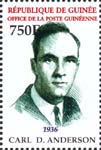
1936 Nobel Physics prize for his discovery of the positron
1947 Nobel Physics prize for his investigations of the physics of the upper atmosphere especially for the discovery of the so-called Appleton layer
François Jean Dominique Arago (February 26, 1786 - October 2, 1853) was a Catalan French mathematician, physicist and astronomer. Arago was born at Estagel, a small village near Perpignan, in the département of Pyrenees-Orientales, France. He was the eldest of four brothers. Showing decided military tastes François Arago was sent to the municipal college of Perpignan, where he began to study mathematics in preparation for the entrance examination of the polytechnic school. Within two years and a half he had mastered all the subjects prescribed for examination, and a great deal more, and, on going up for examination at Toulouse, he astounded his examiner by his knowledge of J. L. Lagrange. Towards the close of 1803 he entered the École Polytechnique, Paris, but apparently found the professors there incapable of imparting knowledge or maintaining discipline. The artillery service was his ambition, and in 1804, through the advice and recommendation of Simeon Poisson, he received the appointment of secretary to the Observatory of Paris. He now became acquainted with Pierre-Simon Laplace, and through his influence was commissioned, with Jean Baptiste Biot, to complete the meridianal measurements which had been begun by J. B. J. Delambre, and interrupted since the death of P. F. A. Méchain in 1804). Arago and Biot left Paris in 1806 and began operations along the mountains of Spain. Biot returned to Paris after they had determined the latitude of Formentera, the southernmost point to which they were to carry the survey. Arago continued the work until 1809, his purpose being to measure a meridian arc in order to determine the exact length of a metre.
After Biot's departure, the political ferment caused by the entrance of the French into Spain extended to the Canary Islands, and the population suspected Arago's movements and his lighting of fires on the top of Mount Galatzo as the activities of a spy for the invading army. Their reaction was such that he was obliged to give himself up for imprisonment in the fortress of Bellver in June 1808. On July 28 he escaped from the island in a fishing-boat, and after adventurous voyage he reached Algiers on August 3. From there he obtained a passage in a vessel bound for Marseilles, but on August 16, just as the vessel was nearing Marseilles, it fell into the hands of a Spanish corsair. With the rest the crew, Arago was taken to Roses, and imprisoned first in a windmill, and afterwards in a fortress, until the town fell into the hands of the French, when the prisoners were transferred to Palamos. After three months' imprisonment they were released on the demand of the dey of Algiers, and again set sail for Marseilles on the November 28, but then within sight of their port they were driven back by a northerly wind to Bougie on the coast of Africa. Transport to Algiers by sea from this place would have occasioned a weary delay of three months; Arago, therefore, set out over land, guided by a Moslem priest, and reached it on Christmas Day. After six months in Algiers he once again, on the June 21, 1809, set sail for Marseilles, where he had to undergo a monotonous and inhospitable quarantine in the lazaretto, before his difficulties were over.
Arago had succeeded in preserving the records of his survey; and his first act on his return home was to deposit them in the Bureau des Longitudes at Paris. As a reward for his adventurous conduct in the cause science, he was elected a member of the Academy of Sciences, at the remarkably early age of twenty-three, and before the close of 1809 he was chosen by the council of the polytechnic school to succeed Gaspard Monge in the chair of analytical geometry. At the same time he was named by the emperor one of the astronomers of the Royal Observatory, which was accordingly his residence till his death, and it was in this capacity that he delivered his remarkably successful series of popular lectures in astronomy, which were continued from 1812 to 1845.
In 1816, along with Joseph Louis Gay-Lussac, he started the Annales de chemie et de physique, and in 1818 or 1819 he proceeded along with Biot to execute geodetic operations on the coasts of France, England and Scotland. They measured the length of the seconds-pendulum at Leith, Scotland, and in the Shetland Islands, the results of the observations being published in 1821, along with those made in Spain. Arago was elected a member the Board of Longitude immediately afterwards, and contributed to each of its Annuals, for about twenty-two years, important scientific notices on astronomy and meteorology and occasionally on civil engineering, as well as interesting memoirs of members of the Academy.
Arago's earliest physical researches were on the pressure of steam at different temperatures, and the velocity of sound, 1818 to 1822. His magnetic observations mostly took place from 1823 to 1826. He discovered what has been called rotatory magnetism, and the fact that most bodies could be magnetized; these discoveries were completed and explained by Michael Faraday. He warmly supported Jean-Augustin Fresnel's optical theories, and the two philosophers conducted together those experiments on the polarization of light which led to the inference that the vibrations of the luminiferous ether were transverse to the direction of motion, and that polarization consisted in a resolution of rectilinear motion into components at right angles to each other. The subsequent invention of the polariscope and discovery of rotatory polarization are due to Arago. The general idea of the experimental determination of the velocity of light in the manner subsequently effected by Fizeau and Leon Foucault was suggested by him in 1838, but his failing eyesight prevented his arranging the details or making the experiments.
Nearly all the mathematical work of the "French school" was done before the year 1830. They are the direct successors of the French writers who flourished at the beginning of the nineteenth century, and seem to have been out of touch with the great German mathematicians of the early part of it, on whose researches much of the best work of that century is based; they are thus placed here, though their writings are in some cases of a later date than those of Gauss, Abel and Jacobi.
In 1830, Arago, who always professed liberal opinions of the breme republican type, was elected a member of the chamber of deputies for the Lower Seine, and he employed his talents of eloquence and scientific knowledge in all questions connected with public education, the rewards of inventors, and the encouragement of the mechanical and practical sciences. Many the most creditable national enterprises, dating from this period, are due to his advocacy - such as the reward to Louis-Jacques Daguerre for the invention of photography, the grant for the publication of the works of Fermat and Laplace, the acquisition of the museum of Cluny, the development of railways and electric telegraphs, the improvement of the reneile. In 1830 also he was appointed director of the Observatory, and as a member of the chamber of deputies he was able to obtain grants of money for rebuilding it in part, and for the addition of magnificent instruments. In the same year, too, he was chosen perpetual secretary of the Academy of Sciences, the place of J. B. J. Fourier. Arago threw his whole soul into its service, and by his faculty of making friends he gained at once for it and for himself a world-wide reputation. As perpetual secretary it was his duty to pronounce historical éloges on deceased members; and for this duty his rapidity and facility of thought, and his happy piquancy of style, and his extensive knowledge peculiarly adapted him. In 1834 he again visited Scotland, to attend the meeting of the British Association at Edinburgh. From this time till 1848 he led a life of comparative quiet - although he continued to work within the Academy and the Observatory to produce a multitude of contributions to all departments of physical science - but on the fall of Louis-Philippe he left his laboratory to join the provisional government. He was entrusted with two important functions, that had never before been given to one person, viz. the ministry of war and of marine; and in the latter capacity he improved of rations in the navy and abolished flogging. He also abolished political oaths of all kinds, and, against an array of moneyed interests, succeeded in procuring the abolition of negro slavery in the French colonies. At the beginning of May 1852, when the government of Louis Napoleon required an oath of allegiance from all its functionaries, Arago peremptorily refused, and sent in his resignation of his post as astronomer at the Bureau des Longitudes. This, however, the prince president declined to accept, and made "an exception in favour of a savant whose works had thrown lustre on France, and whose existence the government would regret to embitter."
Arago's fame as an experimenter and discoverer rests mainly on his contributions to magnetism and still more to optics. He showed that a magnetic needle, made to oscillate over nonruginous surfaces, such as water, glass, copper, etc., falls more rapidly in the extent of its oscillations according as it is more or less approached to the surface. This discovery, which earned him the Copley medal of the Royal Society in 1825, was followed by another, that a rotating plate of copper tends to communicate its motion to a magnetic needle suspended over it ("magnetism of rotation"). Arago is also fairly entitled to be regarded as having proved the long-suspected connexion between the aurora borealis and the variations of the magnetic pa ments[?]. In optics we owe to him not only important optical discoveries of his own, but the credit of stimulating the genius of Jean-Augustin Fresnel, with whose history, as well as with that of Etienne-Louis Malus and of Thomas Young, this part of his life is closely interwoven. Shortly after the beginning of the 19th century the labours of at least three philosophers were shaping the doctrine of the undulatory, or wave, theory of light. Fresnel's arguments in favour of that theory found little favour with Laplace, Poisson and Biot, the champions of the emission theory; but they were ardently espoused by Humboldt and by Arago, who had been appointed by the Academy to report on the paper. This was the foundation of an intimate friendship between Arago and Fresnel, and of a determination to carry on together further fundamental laws of the polarization of light known by their means. As a result of this work Arago constructed a polariscope, which he used for some interesting observations on the polarization of the light of the sky. To him also due the discovery of the power of rotatory polarization exhibited by quartz, and last of all, among his many contributions to the support of the undulatory hypothesis, comes the experimentum crucis which he proposed to carry out for measuring directly the velocity of light in air and in water glass. On the emission theory the velocity should be accelerated by an increase of density in the medium; on the wave theory, it should be retarded. In 1838 he communicated to the Academy the details of his apparatus, which utilized the relaying mirrors employed by Charles Wheatstone in 1835 for measuring the velocity of the electric discharge; but owing to the great care required in the carrying out of the project, and to the interruption to his labours caused by the revolution of 1848, it was the spring of 1850 before he was ready to put his idea the test; and then his eyesight suddenly gave way. Before his death, however, the retardation of light in denser media was demonstrated by the experiments of H. L. Fizeau and B. L. Foucault, which, with improvements in detail, were based on the plan proposed by him.
He remained a consistent republican to the end, and after the coup d'état of 1852, though suffering first from diabetes, then from from Bright's disease, complicated by dropsy, he resigned his post as astronomer rather than take the oath of allegiance. In the summer of 1853 Arago was advised by his physicians to try the effect of his native air, and he accordingly set out to the eastern Pyrenees, but it was ineffective and he died in Paris.
Born: 287 BC in Syracuse, Sicily Died: 212 BC in Syracuse, Sicily
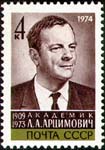
Lev Artsimovitch, Head of the Plasma Physics Division in the Kurchatov Institute of Atomic Energy in Moscow.
|
|
|||||
|
|