|
|
Aphrodite of Cyprus by Jacqueline Karageorghis
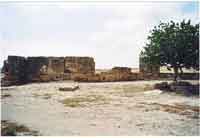
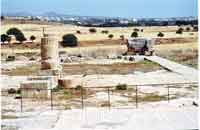
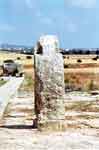
Petra tou romiou area in Paphos District Aphrodite of Cyprus Cyprus does not pay enough tribute to the memory of this ancient divinity, and is not sufficiently proud of having been her chosen birthplace and of sheltering her greatest sanctuary. There is no doubt that Christian moral tradition has contributed towards stifling the memory of a far too pagan cult, considered to be generating licentiousness even though Christian religion in Cyprus has sometimes adopted certain sites and aspects of ancient worship. Indeed, Aphrodite of Cyprus is not merely the blonde goddess of love, grace and beauty, who indulges in her amorous whims, as depicted in a simplistic mythology. She is an ancient-old divinity whose origins are linked to the worshipping of the powers of life. How has the island become famous as the Island of Venus? This fame was preserved thanks to the Greek and Latin texts which were rediscovered by the humanists of the Renaissance who quoted them frequently. They bequeathed to our poets and painters this alluring image of Cyprus, island of Venus. Tradition says that the goddess was born from the foam of the sea and was carried by the sea waves on the coasts of Cyprus, to Pafos, which has become the sacred place where Aphrodite was venerated. It is true that Cyprus was throughout antiquity one of the most important, if not the most famous place, where Aphrodite was venerated. In historical times, the goddess had several sanctuaries on the island, the most famous being in Pafos, a place called "omphalos of the earth", on an equal footing with Delphi (Hesychius). Archaeological findings have confirmed the legend. However, if one goes back to the sources, the legend is far from being so simple as the poets describe it, and the archaeological findings have revealed other aspects of the goddess which differ from the ones attributed by Greek mythology. Myths are uncertain. They provide clues, which are however difficult to be interpreted. It is Hesiod in the 8th century B.C. who refers us in his Theogony to the mythical birth of Aphrodite in the midst of a cosmogony which Aphrodite, according to this strange myth, is therefore the daughter of Heaven (Uranus), as she was born out of the foam which was created by the sperm of Uranus. Hesiod's Theogony, which has no doubt borrowed elements from oriental cosmogonies, where there is often reference to power struggles among the first generations of gods, also copies a Theogony attributed to Orpheus: in the beginning there was Chaos. Creation was monstrous and anarchic. Cronos, by mutilating his father, put an end to this disorderly creation and from then began the reign of Aphrodite associated with Eros. We must surely see in the goddess called Aphrodite the goddess of fertility who perpetuates life through power of desire among the species to reproduce. Already, the Ancients, through a kind of pre-scientific thinking, conceived life being born out of the sea, as experts confirm nowadays. Aphrodite created grass under her feet, for her arrival fertilised the earth. Hesiod is the only source to reveal this supernatural birth, but there are other texts that mention the arrival of Aphrodite to Cyprus, carried by the waves of the sea. Hymn II to Aphrodite, going back to the 7th century B.C. describes beautiful Aphrodite, wearing a golden crown, the venerated goddess who possesses an exclusive privilege to the island of Cyprus, where the moist breath of the western wind wafted her over the waves of the loud moaning sea in soft foam. There the Hours welcomed her joyously and clothed her with heavenly garments (Hymn II, 1-6). The myth of the birth of Aphrodite from the sea has remained embedded in the memory, and Hesiod situates the arrival of Aphrodite in Cyprus, although not explicitly in Pafos. The link between Aphrodite and Pafos was, however, well established among the Ancients. Cyprus and in particular Pafos, is the birthplace of Aphrodite, writes Aeschylus (quoted by Strabon). Pomponius Mela, a Latin poet of the 1st century A.D. mentions Pafos as the place where the goddess was said to have touched ground: Pafos and Palaepafos, where Venus emerged for the first time from the sea, as its inhabitants confirm it (II, 7). Nonnos, a poet of the 5th century A.D. mentions that the inhabitants of Cyprus still show traces of Aphrodite's footprints. The mythical place where she was said to have come ashore is called "Petra tou Romiou" or the "Rock of the Greek", associated by popular tradition to Dighenis Akritas, the legendary hero of the Byzantine era in Cyprus. The site is certainly of sublime beauty, with three large rocks protruding above the water in a small bay lined on the east by white cliffs. The question that arises is: why precisely in this spot? Several explanations have been put forward, some more convincing than others: the sea is more foamy at this spot. When there is a storm, the waves strike the beach and -break' into foam; in exceptional cases the "breaker" shoots up in a column like a water-spout and falls back in an outward cascade of foam in which one can imagine seeing a human figure rising from the sea (a phenomenon described by J.L. Myres in BSA, 41, p.99). Or could it be the presence of the upright protruding rocks, cult objects in ancient oriental religions, that has given rise to the myth? Did the coastline, however, look the same during ancient times? Undoubtedly, oral tradition alone has consecrated the site. In fact, archaeological findings have confirmed the legend, informing us that the south-western area of the island has been the cradle of a cult of fertility during the Chalcolithic period (3800-2300 B.C.). Various sites in this region, from Erimi to the east to Lemba and Kissonerga west of Pafos and in particular, Souskiou, near Palaepafos have brought to light precious vestiges of an already developed civilization, where fertility was the object of worship. In the tombs and settlements numerous small stylised figurines of real The Odyssey contains the most ancient reference to a temple of Aphrodite in Pafos. Thus, in Odyssey VIII, 360-366, Aphrodite goes to Pafos where she had her sanctuary and her altar perfumed with incense. Moreover, in Hymn I to Aphrodite, 58-65, she went to Cyprus, and passed into her sweet-smelling temple (she had a temple and a fragrant altar there). As soon as she went in, she pushed the glittering doors. There the Graces bathed her and rubbed her with heavenly oil... Archaeology comes here once again to confirm the written sources. First, British excavations in 1888 and then systematic excavations carried out by a Swiss-German mission from 1973 to 1979 have brought to light the ruins of the temple of Aphrodite in Palaepafos, the most ancient vestiges of which dating back to the 12th century B.C.; enormous blocks (from 5 metres long by 2 metres high) of a fan enclosure wall, two rows of bases that supported stone pillars, Homer in his epics and Hymns resumes undoubtedly ancient traditions, going back probably to the end of the Bronze Age, and describes in numerous passages the arrival of Aphrodite at her Sanctuary in Pafos, where she used to come to be bathed and dressed by the sacred servants called the Hours or the Charites. In the Odyssey (VIII, 360-366), Aphrodite, having been caught red-handed in the arms of Ares by her husband Hephaistos, flew to Pafos where she had her sanctuary and her altar perfumed with incense; there she was anointed with the immortal oil of the eternal gods by the Charites who dressed her with admirable clothes, wonderful to look at. In the Homeric Hymn I to Aphrodite (Hymn I, 58-68) the goddess went to Cyprus, to Pafos, where her precinct is and a fragrant altar, and passed into her sweet-smelling temple. As soon as she went in she pushed the glittering doors. There the Graces bathed her and rubbed her with heavenly oil. And laughter-loving Aphrodite put on all her rich clothes, and when she had decked herself with gold, she left sweet-smelling Cyprus and went in haste towards Troy... Further on (Hymn I, 86-88) she is described as clad in a robe out-shining the brightness of fire, a splendid robe of gold, enriched with all manner of needlework, which shimmered The local divinity, must have been adopted by the Greeks when they arrived on the island. Under the influence of Cretan colonies who settled in Cyprus in the 11th century B.C., she takes the form of a goddess with her arms raised. The arrival of the Phoenicians who settled in Kition during the 9th century B.C. and who took over existing temples which they dedicated to Astarte, their own goddess, reinforces once again her oriental character whose cult seemed very oriental to the Greeks (Herodotus associates it to the cult of Astarte in Askalon because of the sacred prostitution which was practised in Pafos). Therefore, the divinity that was worshipped during the Iron Age and whom the Cypriotes presumably did not yet call Aphrodite, was of a complex and original nature. It is possible that the Greeks who did not have in those ancient times any divinity called Aphrodite (her name is not mentioned among the Greek gods, quoted on the linear B tablets) met her in Cyprus in the form of this oriental goddess of fertility known under a certain name of oriental origin, which we ignore and they may have transcribed as Aphrodite. The simple etymology according to which 'Aphrodite' means the one that emerges from the foam, derived from the root -aphro-' - foam, is thought by linguists as fanciful. Homer and Hesiod are the most ancient sources to mention the name Aphrodite. In Cyprus, the most ancient inscriptions that we have mentioning the name of the divinity date from the 6th century B.C. These are dedications to Wanassa, (the Sovereign), Paphia (the Paphian) or Golgia (the Golgian). The name Aphrodite is not used in Cyprus until the period when Greek culture started to strongly influence local religion, that is from the 5th century B.C., along with the name of other Greek gods and goddesses. Aphrodite had other lovers in Cyprus. Here she fell in love with Adonis. According to a Homeric scholiast, Adonis was the son of Kinyras, Aphrodite's king-priest, and of the daughter of Pygmalion. According to the most common version (Apollodorus, Bibliotheke, 3.14.4, Plutarchus, Synagogue, 22) he was born of the incestuous love affair between Kinyras with his daughter, Smyrna or Myrrha. Having been tricked by his daughter, Kinyras realised only too late that he had slept with her. He wanted to kill her, but Aphrodite pitied It is hard not to see in Adonis a god of vegetation, fertilizing the earth in spring and then periodically disappearing. Besides, the Orphic hymn to Adonis addresses him as: You, god full of desirable springs, god who nourishes all the creatures, who disappears and comes back again in the course of beautiful seasons, you, who makes the plants grow, you, who loves hunting, sweet and desirable offspring of Aphrodite... come, happy one, bring to the faithful the fruit of earth... Adonis, whose name is semitic, cannot but evoke the oriental fertility divinities, the goddess Ishtar and her son and lover, the god Tammuz, whose marriage was celebrated every year in spring. Just as Adonis, Tammuz died and Ishtar went to the Underworld to find him and bring him back to earth, so that the cycle of the seasons would start again. Thus, the myth of the love of Aphrodite for Adonis no doubt recalls the oriental myth of the union of the goddess of fertility with the god of vegetation. There were ceremonies in honour of Aphrodite and Adonis at Amathus, during which there was a lamentation for Adonis and a supplication to him to return to earth The first millennium B.C. seems to have been the age of gold of the cult of this great Cypriote goddess, who had on the island a number of other sanctuaries. During the archaic period, Golgoi, situated in the centre of the island (the region of Athienou-Idalion) was another of her sacred sites; however, archaeological findings have brought to light only few significant vestiges. She had consecrated sites of worship in Kition, Arsos, Achna, Amathus, Kythrea, Tamassos, Idalion, Lapithos, Salamis and others. The rite of sacred prostitution was practised, according to Herodotus, 1.105. 2-3, in her sanctuary in Pafos. Every girl had to come once in her lifetime to the sanctuary and made love to a stranger. The girls would sit in the sacred gardens with a crown of rope on their head. They waited Source : Aspect of Cyprus
![]() |
|
|||||||||||||||||