Hecuba, Euripides

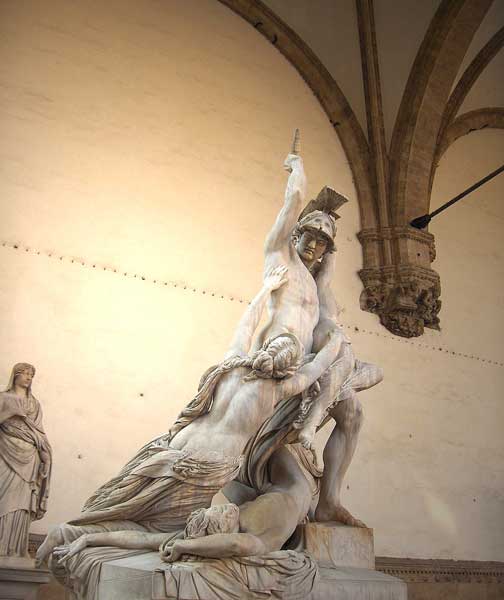
      Neoptolemus holds Polyxena, while Hecuba ask him to release her daughter, her son Polites is dead (still with tears coming from his eyes). Pio Fedi, Loggia dei Lanzi, Florence, Italy [Source]


Hecuba is a tragedy by Euripides written c. 424 BC. The play is meant to take place after the Trojan War, but before the Greeks have departed Troy. It depicts Hecuba's grief over the loss of a daughter, and the revenge she takes over the loss of a son. Taking place near the same time is The Trojan Women, another play by Euripides. This play has also been mentioned in the second act of Hamlet by Shakespeare.

Chorus

  • Captive Trojan Women

Characters

Setting

Translations

  • Edward P. Coleridge, 1891 - prose: full text
  • Arthur S. Way, 1912 - verse
  • J. T. Sheppard, 1927 - verse
  • Hugh O. Meredith, 1937 - verse
  • William Arrowsmith, 1958 - verse
  • Philip Vellacott, 1963 - verse

Plays by Euripides

Retrieved from "http://en.wikipedia.org"
All text is available under the terms of the GNU Free Documentation License

Ancient Greece

Medieval Greece / Byzantine Empire

Modern Greece

Science, Technology , Medicine , Warfare
, Biographies , Life , Cities/Places/Maps , Arts , Literature , Philosophy ,Olympics, Mythology , History , Images

Science, Technology, Arts
, Warfare , Literature, Biographies
Icons, History

Cities, Islands, Regions, Fauna/Flora ,
Biographies , History , Warfare
Science/Technology, Literature, Music , Arts , Film/Actors , Sport , Fashion

Cyprus

Greek-Library - Scientific Web